

De Sanguine / From Blood
group show in Milan
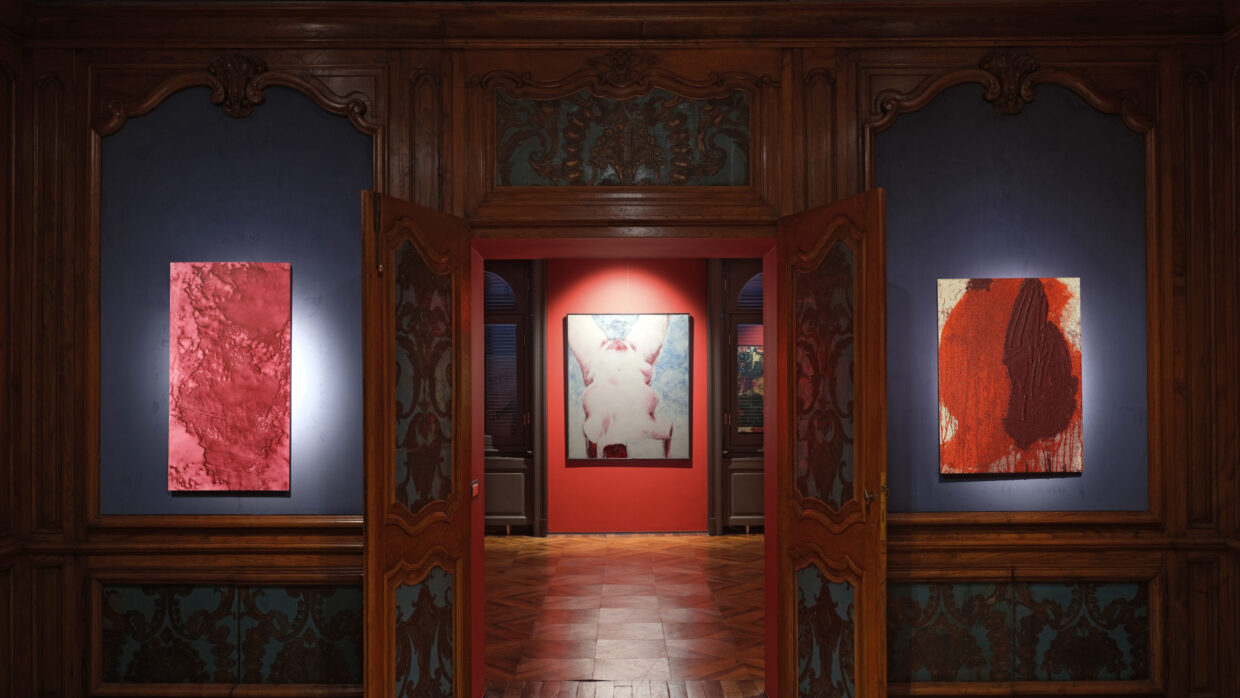
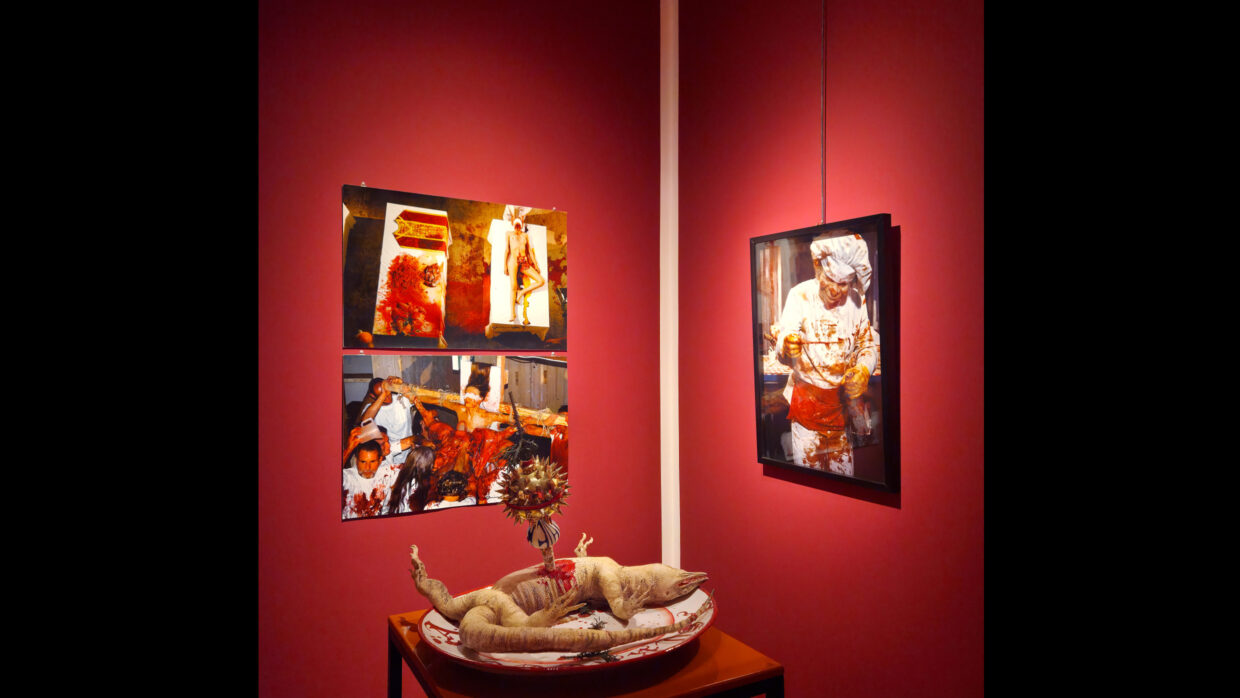
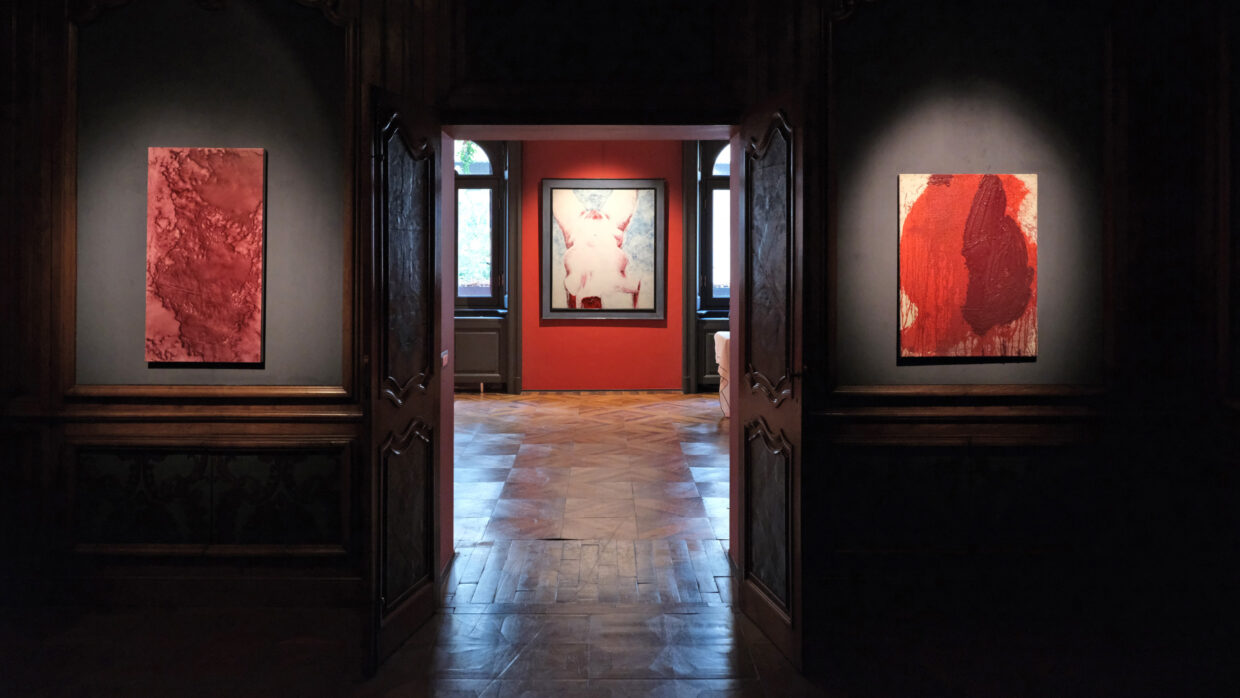
From 16 October to 23 December 2026, BKV Fine Art in Milan presents “De Sanguine”, a group exhibition conceived by Gabriele Tinti. The project centers on the dichotomy between blood and the body—exploring it both as a primal site of human knowledge and perception, and as a symbol of martyrdom and sacrifice. The exhibition’s poetic direction is inspired by a passage from Leviticus 17:14: “The life of every living being is its blood, for it is its life.”
Within this framework, the exhibition brings together 46 works—spanning ancient, modern, and contemporary periods—that trace the fundamental role blood has always played in art and theology. It reflects the enduring human endeavor, common to every era, to find meaning in life and death, and to shape aesthetic ideals.
Transforming Blood into Image
For the Evangelists and the early Christians, there was a pressing need to flee the material traps of this life, to embrace martyrdom, to renounce the self and identify with the body of God through the principle of imitatio Christi (the imitation of Christ). Even before becoming an image, a physical presence, or a liquid, blood and the body are that through which human beings recognize themselves and take shape in the world, or dissolve into it through death. Plato presents corporeality as the prison of the soul, while Husserl conceives of the body as an object experienced by consciousness. The body is thus both that which perceives and that which is perceived. The body and blood are therefore not something one possesses, but rather what one is in one’s being-in-the-world: every gesture, every act of seeing, every contact is already inscribed within a bodily dimension that precedes representation.
“De Sanguine” thus investigates how art has restored the figuration of the body and blood without reducing their sensory complexity. The artists in the exhibition do not propose a stable image of the two elements, but explore their thresholds, fractures, and crisis zones. The body emerges as a surface traversed by marks, wounds, and blood flows, but also as an inaccessible depth, in a process of continuous transformation rather than a defined form. From this perspective, body and blood are not separate elements, but an original vital unity. Only with death does this unity disintegrate: the body dissolves and the blood, from an internal principle, becomes trace and testimony, marking the transition from cohesion to metamorphosis. Blood thus takes on a central and ambivalent role, a sign of life and its vulnerability, an element that challenges the boundary between inside and outside, visible and invisible. In its flow, the body opens itself to time, transformation, and limits. With death—whether by sacrifice, martyrdom, or natural causes—the body changes, is consumed, and regenerated, intertwining with the earth, understood not as a backdrop but as living matter and a principle of continuity between the human and the nonhuman. In many works, the earth becomes a place of burial, sedimentation, or transformation, evoking a cycle that transcends the body itself.
On the occasion of the exhibition, the volume De Sanguine will be published by Eris Press, featuring poems by Gabriele Tinti, and essays by Simon Critchley, Dimitris Lyacos, Georges Didi-Huberman, Gabriele Finaldi, Angelo Tartuferi, Catherine Nixey, and Massimo Cacciari.
Text © BKV Fine Art, Mailand